 RepolveGet the app
What’s your Strength Score?
Enter your lifts to see your score and muscle breakdown.
Free, no signup. Your inputs stay in your browser.
Your estimated starting Strength Score
Your muscle map
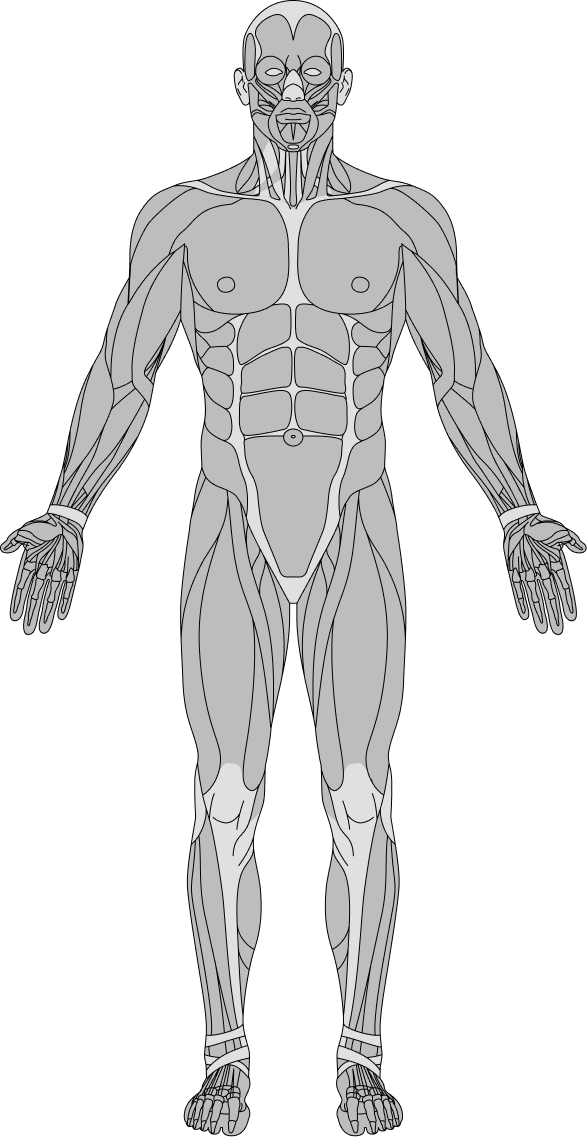
Chest
Score benchmarks
Lifting-standard references, not percentiles or age-adjusted rankings.
Lift details
How it works
. Each lift is compared with bodyweight-relative, sex-specific standards. Rep sets use an estimated one-rep max.
The engine combines measured muscle scores and treats these sets as one workout. Repeated workouts provide more evidence; adding exercises fills in muscle coverage. Neither guarantees a higher score.
Profile calibration: .
Scores are not out of 100. This tool does not measure endurance or technique.
Understand your Strength Score
This lifting strength calculator uses Repolve’s production scoring engine. Enter any supported lifts you know; no specific exercise is required. At least three measured muscle groups are needed for an overall score.
Your result is a starting estimate from one set of workout evidence, not a population percentile or an age-adjusted assessment. More lifts can improve coverage without necessarily increasing the score.
Browse every exercise calculator by muscle group, with exercise-specific load guidance and standards.
Before you interpret your result
Is this a one-rep max calculator?
The tool estimates a one-rep max for eligible entered sets, then uses Repolve’s exercise standards and muscle-level scoring to produce a broader starting estimate. Open Lift details after calculating to see individual exercise estimates. For one lift at a time, try the bench press calculator, squat calculator, deadlift calculator, incline dumbbell press calculator, lat pulldown calculator, overhead press calculator, or barbell row calculator. For unassisted repetitions, use the separate pull-up calculator.
Why do some muscles have no score?
Only supported exercise evidence contributes to the measured breakdown. A blank area means there is no score from the data you entered; it does not mean that muscle is weak. Three measured muscle groups are needed for an overall score. Learn how Strength Profile coverage works.
Does my score tell me how I compare with everyone else?
No. Repolve’s score uses its own bodyweight-relative, sex-specific benchmarks. It is not a population percentile, and the current calculation does not adjust for age. Use the standards guide to understand the scale.
How can I track changes after this estimate?
This calculator is a snapshot. A consistent workout history lets you compare the sets behind a change and understand progress over time. Read how to track strength progress or compare workout tracking apps.